Price Tag Icons: A Versatile Tool for Modern Designers and Businesses
In today’s fast-paced digital landscape, visual elements play a crucial role in communication, branding, and user experience. One such element that has gained significant traction is the Price Tag Icon. These icons are not just simple graphics; they are powerful tools that convey information quickly and effectively across various platforms. Whether you're designing a website, developing a mobile app, or creating marketing materials, Price Tag Icons offer a blend of functionality and aesthetics that can elevate your projects to the next level.
Understanding Price Tag Icons
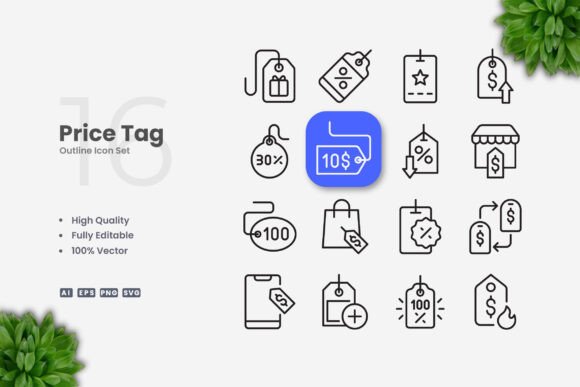
Price Tag Icons are typically small, stylized representations of price tags used to indicate cost, value, or pricing information. They come in a variety of designs, but the focus here is on simple and clean icon design, which aligns with current trends in minimalism and user-centric interfaces. These icons are often used in e-commerce, financial services, and retail environments to communicate pricing clearly and efficiently.
The key characteristics of Price Tag Icons include their scalability, versatility, and ease of customization. With 100 Vector files, these icons can be resized without losing quality, making them suitable for both digital and print media. Their editable stroke and customizable color options allow designers to adapt them to different brand identities and visual styles.
Why Price Tag Icons Matter in Today’s Market
The demand for Price Tag Icons has grown alongside the rise of digital commerce and the need for clear, concise visual communication. As more businesses move online, the ability to convey pricing information at a glance becomes essential. This is where Price Tag Icons shine, offering a universal visual language that transcends language barriers and enhances user experience.
Moreover, Price Tag Icons fit into broader industry trends such as minimalist design, responsive web design, and user interface optimization. In an era where users expect instant access to information, these icons help streamline the presentation of pricing data, reducing cognitive load and improving engagement.
Applications Across Industries
The utility of Price Tag Icons extends beyond e-commerce. For instance, in mobile apps, they can be used to highlight subscription costs, in-app purchases, or promotional offers. In social media, they serve as visual cues for deals, discounts, or limited-time offers, capturing attention and driving conversions.
For print materials like flyers, posters, and banners, Price Tag Icons add a professional touch while ensuring clarity. In infographics, they can represent cost-related data points, making complex information more digestible. The SVG file and PNG transparency formats ensure compatibility across different platforms, making it easy to integrate these icons into any project.
Customization and Flexibility
One of the standout features of Price Tag Icons is their customizability. With 100 Vector files, users can easily adjust the size, color, and stroke weight using vector software like Adobe Illustrator or CorelDRAW. This flexibility allows designers to maintain brand consistency while adapting the icons to specific needs.
The inclusion of Source File Ai, EPS Version 10, and SVG File ensures that these icons are accessible to a wide range of users, from beginners to professionals. Additionally, the Readme.txt file provides helpful instructions, making the setup process straightforward.
Meeting Evolving Needs and Expectations
As consumer behavior continues to evolve, so do the expectations for visual content. Users now seek instant gratification and seamless experiences, which places a premium on clear and effective design. Price Tag Icons meet these expectations by providing a quick, visual way to communicate pricing information without cluttering the interface.
Furthermore, the shift towards personalized experiences means that brands must find ways to stand out in a crowded market. Price Tag Icons can be customized to reflect a brand’s unique identity, helping to create a cohesive and memorable visual presence.
Practical Examples and Observations
Consider an online marketplace that uses Price Tag Icons to highlight featured products. By placing these icons next to product titles, the platform can draw attention to special offers or premium listings, increasing visibility and click-through rates. Similarly, a mobile app that includes Price Tag Icons for subscription tiers can help users quickly understand the value proposition of each plan.
In the realm of digital marketing, Price Tag Icons can be used in email campaigns, social media posts, and landing pages to emphasize discounts or promotions. Their simplicity makes them ideal for use in infographics, where they can visually represent cost-saving opportunities or budget-friendly options.
Looking Ahead: The Future of Price Tag Icons
As technology advances and design trends continue to evolve, Price Tag Icons are likely to remain relevant. The growing emphasis on accessibility and user-centered design will further underscore the importance of clear, intuitive visuals. Additionally, the integration of AI-driven design tools may open new possibilities for automating the customization and placement of these icons.
For professionals, creators, and entrepreneurs, Price Tag Icons represent more than just a design asset—they are a strategic tool that can enhance communication, improve user experience, and support business growth. By leveraging the high-quality design and customizability of these icons, individuals and organizations can stay ahead of the curve in an increasingly competitive market.