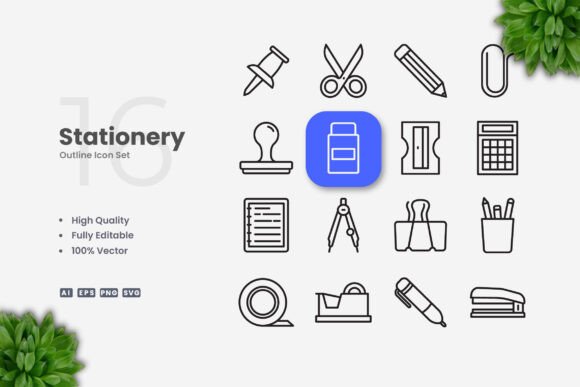
Stationery Icons: A Versatile Tool for Modern Design
In today's digital and print-driven world, visual elements play a crucial role in communication. Stationery Icons are a powerful resource for designers, developers, and content creators looking to enhance their projects with clean, professional, and adaptable graphics. These icons are not just decorative; they serve as functional tools that can improve user experience, convey information quickly, and maintain a cohesive aesthetic across various platforms.
Whether you're working on a website, mobile app, book, social media post, infographic, flyer, or banner, Stationery Icons offer a solution that is both practical and visually appealing. Their simple and clean design ensures that they fit seamlessly into any project, making them an essential addition to any designer's toolkit.
Understanding the Challenges of Icon Design
Designing effective icons can be a complex task. The challenge lies in creating visuals that are instantly recognizable, scalable, and adaptable to different contexts. Many designers struggle with finding icons that are both high-quality and customizable, especially when they need to adjust colors, stroke weights, or resize elements for different formats.
Additionally, ensuring consistency across multiple platforms can be difficult. Different devices and mediums may require specific file types or resolutions, which can complicate the design process. Without the right tools, these challenges can lead to inconsistencies, poor user experiences, and increased development time.
How Stationery Icons Can Help
Stationery Icons address these challenges by offering a comprehensive set of vector-based graphics that are easy to edit and adapt. Each icon is designed with precision, ensuring clarity and readability at any size. This makes them ideal for use in a wide range of applications, from web interfaces to printed materials.
One of the key benefits of Stationery Icons is their high-quality design. Each icon is crafted to maintain its integrity regardless of the scale or format. This means that whether you're using them on a mobile app or a large poster, they will look sharp and professional.
Practical Applications of Stationery Icons
The versatility of Stationery Icons makes them suitable for a variety of uses. For example, in web design, they can be used to create intuitive navigation menus, buttons, and interactive elements. In mobile apps, they help users understand functions quickly and efficiently. For print materials like flyers and posters, they add a polished look that enhances the overall design.
Stationery Icons are also valuable in social media and digital marketing. They can be used to create engaging content, such as infographics or promotional banners, that capture attention and convey messages effectively. Their clean design ensures that they remain visually appealing even when used in different contexts.
Customization and Flexibility
One of the standout features of Stationery Icons is their customization potential. With access to source files in formats like Adobe Illustrator (AI), Encapsulated PostScript (EPS), Scalable Vector Graphics (SVG), and Portable Network Graphics (PNG), users have complete control over the design. This allows for easy adjustments in color, stroke weight, and other properties to match specific branding or design requirements.
The ability to edit these icons in vector software like Adobe Illustrator and CorelDRAW ensures that they can be adapted to fit any project. Whether you need to change the color scheme, adjust the line thickness, or reposition elements, the editable nature of these icons makes it simple to achieve the desired outcome.
Choosing the Right Tools for Your Project
While Stationery Icons provide a solid foundation, the choice of tools can significantly impact the final result. Designers who are familiar with vector editing software will find it easier to modify and integrate these icons into their work. However, those who are less experienced may benefit from using drag-and-drop tools or pre-designed templates that simplify the process.
Regardless of your level of expertise, the availability of multiple file formats ensures that you can work with the tools that best suit your needs. For instance, SVG files are ideal for web use, while EPS and AI files are preferred for print and high-resolution outputs. PNG files with transparency are useful for digital backgrounds and overlays.
Recommendations for Effective Use
To make the most of Stationery Icons, consider the following recommendations:
- Plan Ahead: Determine the purpose and context of each icon before selecting or customizing it. This helps ensure that the final design aligns with your goals.
- Test Across Platforms: Check how the icons look on different devices and in various formats to ensure consistency and quality.
- Stay Consistent: Use a unified style across all icons to maintain a cohesive look throughout your project.
- Use Readme Files: Take advantage of the included readme.txt file to understand the structure and options available for each icon.
By following these guidelines, you can maximize the effectiveness of Stationery Icons and create designs that are both functional and aesthetically pleasing.
Conclusion
Stationery Icons are more than just graphic elements—they are essential tools that can elevate the quality and functionality of your design projects. Their clean, customizable, and high-quality design makes them suitable for a wide range of applications, from digital interfaces to printed materials.
Whether you're a seasoned designer or a beginner, Stationery Icons offer a flexible solution that can adapt to your needs. By leveraging their features and exploring their potential, you can create designs that are not only visually appealing but also highly effective in communicating your message.