Vintage Icons: Timeless Design for Modern Applications
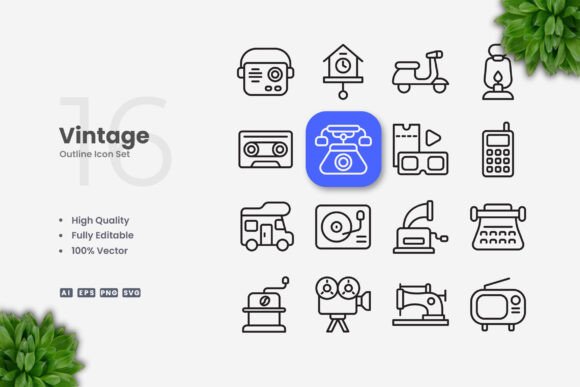
Vintage Icons offer a unique blend of historical charm and contemporary usability, making them ideal for a wide range of design projects. These icons draw inspiration from past eras, incorporating elements such as hand-drawn textures, aged paper effects, and classic typography. What sets Vintage Icons apart is their ability to evoke nostalgia while maintaining clarity and functionality in modern digital and print environments.
What Makes Vintage Icons Distinct?
Vintage Icons are not just about aesthetics; they are designed with practicality in mind. Unlike generic icon sets, which often prioritize minimalism or modern trends, Vintage Icons incorporate visual cues that reflect traditional design principles. This includes subtle gradients, soft shadows, and intricate detailing that can add depth and character to any project.
The design language of Vintage Icons is versatile enough to work across different mediums. Whether you're creating a website, mobile app, or printed material like a flyer or poster, these icons maintain a cohesive look without sacrificing readability. Their clean lines and structured composition ensure they remain legible even at smaller sizes.
Comparing Vintage Icons with Other Styles
When considering icon styles, it's important to understand how Vintage Icons compare to other popular approaches. For instance, flat design emphasizes simplicity and two-dimensional shapes, often using bold colors and no shading. In contrast, Vintage Icons introduce a layer of complexity through texture and dimension, which can make them more engaging for certain audiences.
Semi-organic or hand-drawn styles also share some similarities with Vintage Icons, but they tend to be more irregular and less structured. While this can create a more artistic feel, it may not be suitable for all applications. Vintage Icons strike a balance between artistic expression and functional design, offering a middle ground that works well in both digital and print formats.
Strengths and Tradeoffs
Vintage Icons excel in situations where a sense of history or authenticity is desired. They are particularly effective for branding that targets a mature audience or projects with a retro theme. Additionally, their high-quality vector format ensures scalability without loss of detail, making them adaptable for various resolutions and screen sizes.
However, there are tradeoffs to consider. The added texture and detail in Vintage Icons can sometimes make them less suitable for minimalist designs or interfaces that require a streamlined look. In such cases, simpler icon sets might be more appropriate. It's also worth noting that the vintage aesthetic may not resonate with all audiences, depending on the context and target demographic.
Best Fit Situations for Vintage Icons
Vintage Icons are particularly well-suited for projects that benefit from a nostalgic or artisanal feel. For example, a coffee shop’s website might use Vintage Icons to reinforce a cozy, traditional atmosphere. Similarly, a book cover or magazine layout could incorporate these icons to enhance the overall visual storytelling.
They are also useful in infographics or data visualization where a touch of elegance can help convey information more effectively. In social media content, Vintage Icons can add personality and uniqueness, helping a brand stand out in a crowded space. However, it's important to use them thoughtfully to avoid overwhelming the viewer.
Limitations and Decision Factors
While Vintage Icons offer many benefits, they are not a one-size-fits-all solution. One limitation is their potential incompatibility with highly modern or tech-oriented designs. If the goal is to create a sleek, futuristic interface, Vintage Icons may not align with the intended visual identity.
Another consideration is the level of customization required. Although Vintage Icons are 100% editable, modifying them may require some design expertise, especially when working with vector software like Adobe Illustrator or CorelDRAW. Users who are less familiar with these tools may find the process more challenging compared to using pre-designed icon sets.
When to Choose Vintage Icons Over Alternatives
Vintage Icons are a strong choice when the goal is to create a distinct visual identity that reflects a specific era or style. They are ideal for projects that aim to connect with audiences on an emotional level, such as marketing campaigns targeting a particular generation or cultural niche.
For example, if you're designing a mobile app for a vintage clothing store, using Vintage Icons can help reinforce the brand's theme and create a more immersive experience. In contrast, if the app is focused on cutting-edge technology, a more modern icon set would likely be more appropriate.
Practical Examples and Use Cases
Consider a scenario where a designer is working on a travel blog. Using Vintage Icons for navigation buttons or section headers can add a sense of adventure and exploration, evoking the feeling of old-world travel guides. Similarly, a music streaming service might use Vintage Icons to highlight classic albums or genres, appealing to listeners who appreciate retro aesthetics.
In print materials, Vintage Icons can enhance the visual appeal of brochures, business cards, or banners. Their high-quality vector format ensures they remain sharp and clear, regardless of the size at which they are printed. This makes them a reliable choice for designers who need consistency across multiple platforms.
Conclusion: Evaluating the Right Choice
Vintage Icons provide a compelling option for designers looking to add character and depth to their projects. Their combination of historical influence and modern adaptability makes them suitable for a variety of applications. However, the decision to use them should be based on the specific needs of the project and the preferences of the target audience.
By understanding the strengths and limitations of Vintage Icons, designers can make informed choices that align with their creative goals. Whether used as a standalone element or integrated into a broader design strategy, Vintage Icons offer a valuable tool for those seeking to blend tradition with innovation.