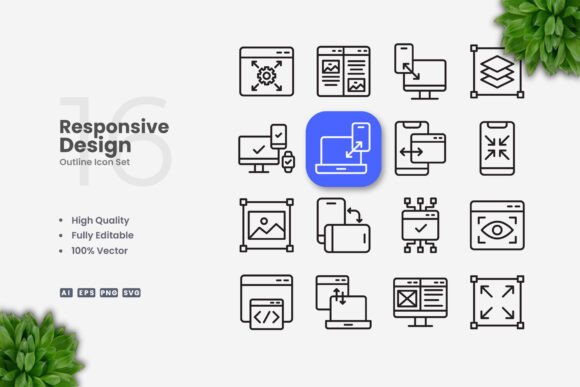
Responsive Design Icons for Every Project
Whether you're working on a website, mobile app, or a printed brochure, having the right icons can make all the difference. Responsive Design Icons are designed to fit seamlessly into any project, no matter the size or medium. These icons aren’t just visually appealing—they’re built with practicality in mind, making them a go-to resource for creators and professionals alike.
What Are Responsive Design Icons?
Responsive Design Icons are a collection of vector-based graphics that adapt to different screen sizes and resolutions. Unlike static images, these icons maintain their clarity and sharpness whether they’re displayed on a smartphone, tablet, or desktop monitor. This adaptability is crucial in today’s digital world, where users access content across a variety of devices.
Each icon is crafted with simplicity and cleanliness in mind. The design focuses on clear shapes, minimal details, and consistent styling, ensuring that they look great in any context. Whether you're designing a social media post or a product manual, these icons provide a professional and cohesive visual language.
When and Where to Use Responsive Design Icons
Responsive Design Icons are incredibly versatile. They work well in websites, mobile apps, books, social media posts, infographics, flyers, print materials, banners, and posters. Their scalability and editability make them ideal for both digital and physical projects.
For example, if you're building a website, you can use these icons to represent navigation menus, buttons, or interactive elements. In a mobile app, they help users quickly understand features and functions. For print materials like brochures or flyers, the clean design ensures readability and visual appeal without requiring high-resolution images.
Marketers and entrepreneurs often use these icons to create engaging social media content. Whether it's a carousel post or an Instagram story, icons add visual interest and help convey information quickly. Educators and trainers might include them in presentations or e-learning modules to illustrate concepts more clearly.
Real-World Use Cases
Let’s consider a few real-world scenarios where Responsive Design Icons come in handy. A small business owner launching an online store might use these icons to design product categories, payment options, or shipping indicators. The ability to resize and change colors means they can match the brand’s color scheme effortlessly.
A freelance graphic designer working on a client’s project could benefit from the customizable nature of these icons. They can adjust stroke weights, change colors, or modify shapes to fit specific design requirements. This flexibility saves time and ensures the final design aligns with the client’s vision.
For a blogger creating a series of tutorial videos, using these icons can help break up text-heavy content. Adding icons to headings or key points makes the content more engaging and easier to follow. It also helps in creating thumbnails that stand out on platforms like YouTube or Vimeo.
Who Benefits from Responsive Design Icons?
These icons are valuable for a wide range of users. Creators, such as web designers and app developers, rely on them to build visually appealing interfaces. Entrepreneurs and marketers use them to enhance branding and user experience. Educators and students find them useful for presentations and study materials.
Freelancers and small business owners appreciate the cost-effectiveness of these icons. Instead of hiring a designer for every project, they can use a ready-made set that meets their needs. Hobbyists and DIY enthusiasts also enjoy the creative freedom these icons offer, allowing them to experiment with designs without technical barriers.
Even everyday users who want to improve their digital projects can benefit. Whether it's adding icons to a personal blog or creating a poster for a local event, these resources simplify the design process and elevate the final outcome.
What to Consider Before Using Responsive Design Icons
Before applying or purchasing Responsive Design Icons, it's important to think about your specific needs. Ask yourself: What type of project am I working on? What style do I need? How will the icons be used—digitally, in print, or both?
Understanding your audience is also key. If you're designing for a professional setting, the icons should reflect that tone. For a more casual or creative project, you might prefer a bolder or more whimsical style. Always check the file formats included, such as AI, EPS, SVG, and PNG, to ensure compatibility with your workflow.
Consider the level of customization required. Some icons may allow for easy color changes, while others may require more advanced editing. If you're not familiar with vector software like Adobe Illustrator or CorelDRAW, look for icons that are easy to modify or come with detailed instructions.
Final Thoughts
Responsive Design Icons are more than just decorative elements—they’re essential tools that enhance communication, improve user experience, and add visual polish to any project. Whether you're a designer, marketer, educator, or hobbyist, these icons offer a practical solution for a wide range of creative and professional needs.
By choosing high-quality, customizable icons, you invest in a resource that adapts to your goals and grows with your projects. With the right approach, these icons can transform your designs and help you achieve better results in both digital and physical formats.